
Cold-Fermented Washed Process ของ Panama Hacienda La Esmeralda Geisha คืออะไร
ในช่วงหลายปีที่ผ่านมา วงการ Specialty Coffee ได้เห็นการพัฒนาอย่างต่อเนื่องของกระบวนการแปรรูปกาแฟ หรือ Coffee Processing ไม่ว่าจะเป็น Anaerobic Fermentation, Carbonic Maceration, Thermal Shock, Yeast Inoculation หรือเทคนิคการหมักรูปแบบต่าง ๆ ที่ช่วยให้ผู้ผลิตสามารถควบคุมคุณภาพและเอกลักษณ์ของกาแฟได้ละเอียดมากขึ้น
หนึ่งในแนวทางที่ได้รับความสนใจเพิ่มขึ้นอย่างต่อเนื่องคือ Cold Fermentation หรือการหมักภายใต้สภาพแวดล้อมที่มีการควบคุมอุณหภูมิให้ต่ำกว่าการหมักทั่วไป
เมื่อนำแนวคิดนี้มาใช้ร่วมกับ Washed Process จึงเกิดเป็นแนวทางที่หลายคนเรียกว่า Cold Fermentation Washed หรือ Washed Coffee with Low-Temperature Fermentation ซึ่งยังคงความสะอาดและความชัดเจนของกาแฟแบบ Washed เอาไว้ ขณะเดียวกันก็ช่วยให้ผู้ผลิตสามารถควบคุมการหมักได้อย่างแม่นยำมากขึ้น
โดยเฉพาะในกาแฟสายพันธุ์ Geisha ที่มีรายละเอียดของกลิ่นและรสชาติละเอียดอ่อนอยู่แล้ว การควบคุมอุณหภูมิระหว่างการหมักจึงเป็นหนึ่งในเครื่องมือสำคัญที่ช่วยรักษาความสมดุล ความสะอาด และความชัดเจนของคาแรกเตอร์กาแฟแต่ละล็อต
Coffee Fermentation: จากการล้างเมือก สู่ศาสตร์แห่งการสร้างรสชาติ
หากย้อนกลับไปในอดีต การหมักกาแฟ (Coffee Fermentation) ไม่ได้ถูกออกแบบมาเพื่อสร้างกลิ่นหรือรสชาติที่ซับซ้อนเหมือนในปัจจุบัน
โดยเฉพาะใน Washed Process แบบดั้งเดิม การหมักมีหน้าที่หลักเพียงอย่างเดียวคือกำจัดเมือก (Mucilage) หรือสารเพกตินที่เคลือบอยู่รอบเมล็ดกาแฟ เพื่อเตรียมเมล็ดสำหรับการล้างและตากแห้ง
กระบวนการดังกล่าวมักใช้เวลาประมาณ 6–36 ชั่วโมง ขึ้นอยู่กับอุณหภูมิ ความหนาของเมือก และสภาพแวดล้อมของแต่ละพื้นที่
แต่ในปัจจุบัน ผู้ผลิตกาแฟเริ่มมองการหมักในมุมที่แตกต่างออกไป
จุลินทรีย์ต่าง ๆ ไม่ว่าจะเป็นยีสต์ (Yeast) หรือแบคทีเรีย (Bacteria) จะย่อยสลายน้ำตาลและสารอินทรีย์ภายในผลกาแฟ ก่อนสร้างสารประกอบกลุ่มเอสเทอร์ (Esters) กรดอินทรีย์ และสารหอมระเหยจำนวนมาก ซึ่งมีส่วนสำคัญต่อกลิ่นและรสชาติของกาแฟในแก้วสุดท้าย
ด้วยเหตุนี้ การหมักจึงไม่ได้เป็นเพียงขั้นตอนก่อนการตากอีกต่อไป แต่กลายเป็นหนึ่งในเครื่องมือสำคัญที่ผู้ผลิตกาแฟใช้ในการสร้างเอกลักษณ์และยกระดับคุณภาพของกาแฟ Specialty Coffee
Controlled Fermentation คืออะไรในวงการ Specialty Coffee
ปัจจุบันวงการกาแฟกำลังก้าวเข้าสู่ยุคของ Controlled Fermentation หรือการหมักแบบควบคุม
แทนที่จะปล่อยให้จุลินทรีย์ในธรรมชาติทำงานอย่างอิสระ ผู้ผลิตจะควบคุมปัจจัยต่าง ๆ อย่างละเอียด เช่น
- อุณหภูมิ
- ระยะเวลาการหมัก
- ปริมาณออกซิเจน
- ค่า pH
- ความชื้น
- ชนิดของจุลินทรีย์หรือยีสต์ที่ใช้
แนวคิดนี้ทำให้เกิดเทคนิคการหมักสมัยใหม่มากมาย เช่น
- Anaerobic Fermentation
- Carbonic Maceration
- Yeast Inoculation
- Thermal Shock
- Cold Fermentation
ซึ่งกำลังกลายเป็นมาตรฐานของกาแฟไมโครล็อตและกาแฟระดับแข่งขันทั่วโลก
การหมักนานขึ้น ไม่ได้แปลว่าดีกว่าเสมอไป
ในช่วงไม่กี่ปีที่ผ่านมา มีผู้ผลิตหลายรายทดลองหมักกาแฟเป็นเวลาหลายร้อยชั่วโมง บางล็อตใช้เวลาหมักนานกว่า 700 ชั่วโมง เพื่อสำรวจขีดจำกัดใหม่ของรสชาติ
อย่างไรก็ตาม ระยะเวลาไม่ใช่ปัจจัยเดียวที่กำหนดคุณภาพของการหมัก
ในความเป็นจริง อุณหภูมิและสภาพแวดล้อมมีผลต่ออัตราการหมักมากกว่าเวลาเสียอีก
การหมัก 24 ชั่วโมงในพื้นที่เขตร้อนอาจเกิดปฏิกิริยาทางชีวภาพได้มากกว่าการหมัก 48 ชั่วโมงในพื้นที่อากาศเย็น
หากหมักนานเกินไปโดยขาดการควบคุม จุลินทรีย์อาจใช้น้ำตาลจนหมดและเริ่มย่อยสลายสารอาหารภายในเมล็ดกาแฟ ส่งผลให้เกิดกลิ่นหมักที่ไม่พึงประสงค์ หรือภาวะที่เรียกว่า Over-Fermentation
ดังนั้น ความสำเร็จของการหมักไม่ได้อยู่ที่การทำให้นานที่สุด แต่อยู่ที่การควบคุมกระบวนการให้เหมาะสมกับวัตถุดิบแต่ละล็อต
Cold-Fermented Washed Process คืออะไร?
Cold-Fermented Washed Process คือการนำแนวคิดของ Controlled Fermentation มาประยุกต์ใช้กับ Washed Process แบบดั้งเดิม
หลังจากนำเปลือกเชอร์รี่ออก เมล็ดกาแฟจะถูกหมักในสภาพแวดล้อมที่มีการควบคุมอุณหภูมิให้ต่ำกว่าปกติ
การลดอุณหภูมิระหว่างการหมักจะช่วยชะลอการทำงานของจุลินทรีย์ ทำให้กระบวนการเปลี่ยนแปลงทางชีวภาพเกิดขึ้นอย่างค่อยเป็นค่อยไป และสามารถควบคุมได้ง่ายขึ้น
ผลลัพธ์คือ
- Aroma ที่ชัดเจนและละเอียดขึ้น
- Floral Notes ที่โดดเด่นขึ้น
- Fruity Sweetness ที่ซับซ้อนขึ้น
- Tea-like Character
- Silky Mouthfeel
- Aftertaste ที่ยาวนานขึ้น
- Clarity สูงแบบ Washed Process
หลังจากหมักเสร็จ เมล็ดกาแฟจะถูกล้างและนำไปตากแห้งเช่นเดียวกับ Washed Process ทั่วไป
ความหวานในกาแฟหมักเกิดขึ้นได้อย่างไร?
สิ่งที่น่าสนใจคือ การหมักไม่ได้เพิ่มปริมาณน้ำตาลในเมล็ดกาแฟ
ในทางตรงกันข้าม จุลินทรีย์จะใช้น้ำตาลเป็นแหล่งพลังงานระหว่างการหมัก
แต่สิ่งที่ทำให้ผู้ดื่มรู้สึกว่ากาแฟมีความหวานมากขึ้น คือสารประกอบกลุ่ม Aromatic Compounds ที่เกิดขึ้นระหว่างกระบวนการหมัก
เมื่อเราได้กลิ่นที่คล้ายผลไม้สุก น้ำผึ้ง หรือดอกไม้ สมองจะเชื่อมโยงกลิ่นเหล่านี้เข้ากับประสบการณ์ของความหวาน ทำให้กาแฟมีความรู้สึกหวานและซับซ้อนมากขึ้น แม้ว่าน้ำตาลจริงภายในเมล็ดจะลดลงก็ตาม
ทำไม Cold Fermentation Washed จึงน่าสนใจสำหรับ Geisha?
เมื่อพูดถึง Panama Geisha จุดเด่นสำคัญคือความละเอียดอ่อนของกลิ่นและรสชาติ
คาแรกเตอร์ที่มักพบใน Geisha คุณภาพสูง ได้แก่
- Floral Aroma
- Jasmine-like Fragrance
- Citrus Notes
- Tea-like Character
- Elegant Acidity
- Silky Texture
ด้วยความละเอียดอ่อนของสายพันธุ์นี้ ผู้ผลิตจึงให้ความสำคัญกับการควบคุมทุกขั้นตอนของกระบวนการผลิต ตั้งแต่การเก็บเกี่ยว การคัดแยก การหมัก ไปจนถึงการตากแห้ง
Cold Fermentation Washed จึงเป็นแนวทางที่น่าสนใจสำหรับ Geisha เพราะยังคงความสะอาดแบบ Washed Process เอาไว้ ขณะเดียวกันก็ช่วยให้การหมักเกิดขึ้นภายใต้สภาวะที่ควบคุมได้มากขึ้น
Hacienda La Esmeralda: จุดเปลี่ยนสำคัญของ Panama Geisha
หากพูดถึง Geisha ที่ทรงอิทธิพลที่สุดในโลก Specialty Coffee ชื่อของ Hacienda La Esmeralda คือหนึ่งในฟาร์มที่ได้รับการยอมรับมากที่สุด
Hacienda La Esmeralda (อ่านบทความ Esmeralda Geisha จากฟาร์มระดับตำนาน ที่เพิ่งคว้าแชมป์โลก) ก่อตั้งขึ้นครั้งแรกในปี 1940 โดย Hans Elliot เจ้าของชาวสวีเดน ซึ่งได้รวบรวมผืนดินหลายแปลงเข้าเป็นเอสเตทขนาดใหญ่ พื้นที่เหล่านี้ต่อมากลายเป็นส่วนหนึ่งของ Palmira Farm และ Cañas Verdes Farm
ในปี 1967 Rudolph A. Peterson นายธนาคารชาวสวีเดน-อเมริกัน ได้ซื้อ Hacienda La Esmeralda ไว้เป็นการลงทุน ในช่วงเวลานั้น พื้นที่ส่วนใหญ่ยังถูกใช้สำหรับการเลี้ยงโคเนื้อ และมีการปลูกกาแฟเพียงเล็กน้อย
ต่อมาในปี 1975 ครอบครัว Peterson ได้เปลี่ยนฟาร์มให้เป็นฟาร์มโคนม ซึ่งยังคงครอบคลุมพื้นที่ราวครึ่งหนึ่งของเอสเตทมาจนถึงปัจจุบัน
ในช่วงกลางทศวรรษ 1980 ครอบครัว Peterson เริ่มมองหาแนวทางในการพัฒนาธุรกิจของฟาร์มเพิ่มเติม และด้วยประวัติศาสตร์การปลูกกาแฟอันยาวนานของ Boquete กาแฟจึงกลายเป็นโอกาสที่น่าสนใจ
Boquete เป็นพื้นที่ที่มีการปลูกกาแฟมาตั้งแต่ราวปี 1890 และมีองค์ความรู้ด้านกาแฟสั่งสมมายาวนาน ครอบครัว Peterson จึงเริ่มขยายพื้นที่ปลูกกาแฟอย่างจริงจัง โดยในปี 1988 ได้เริ่มการขยายฟาร์มกาแฟครั้งสำคัญที่ Palmira
ในเวลานั้น กาแฟปานามายังถูกมองเป็นสินค้าเกษตรทั่วไป จนกระทั่งช่วงกลางทศวรรษ 1990 ผู้ซื้อจากอเมริกาเหนือเริ่มพูดถึงแนวคิด “Specialty Coffee” มากขึ้น
ในปี 1997 ครอบครัว Peterson ได้ซื้อพื้นที่แปลงใหม่ ซึ่งต่อมากลายเป็น Jaramillo Farm พวกเขาเลือกพื้นที่นี้จากระดับความสูงและทำเลใกล้ Volcán Barú ด้วยความหวังว่าจะสามารถผลิตกาแฟคุณภาพสูงได้
การค้นพบ Geisha จากพื้นที่นี้กลายเป็นจุดเปลี่ยนสำคัญของประวัติศาสตร์ Specialty Coffee
ในปี 2004 Hacienda La Esmeralda Geisha เปิดตัวอย่างเป็นทางการในการแข่งขัน Best of Panama และคว้ารางวัลชนะเลิศ ในปีนั้น ครอบครัว Peterson ได้แยกกาแฟจากแต่ละแปลงออกเป็นล็อตย่อยระหว่างการแปรรูป ซึ่งเป็นสิ่งที่พวกเขายังไม่เคยทำมาก่อน
หนึ่งในล็อตจากพื้นที่สูงของ Jaramillo สร้างความประทับใจให้กรรมการอย่างมาก ด้วยความชัดเจน ความฉ่ำ และกลิ่นรสที่ซับซ้อน จนกลายเป็นหนึ่งในครั้งแรก ๆ ที่ผู้เชี่ยวชาญกาแฟได้ลิ้มรสตัวอย่าง 100% Geisha อย่างเต็มรูปแบบ
เมื่อเทียบกับกาแฟลาตินอเมริกาทั่วไปในยุคนั้น Geisha จากพื้นที่สูงของ Esmeralda ให้โปรไฟล์ที่ใกล้เคียงกับกาแฟเอธิโอเปียมากกว่า ทั้งความหอม ความโปร่ง และมิติของกลิ่นรสที่โดดเด่น
ในปีเดียวกัน Hacienda La Esmeralda Geisha ได้สร้างสถิติราคาประมูลใหม่ และกลายเป็นหนึ่งในกาแฟที่มีชื่อเสียงที่สุดในโลก
ทำไม Cañas Verdes จึงมีความสำคัญ?
Cañas Verdes เป็นหนึ่งในพื้นที่เพาะปลูกสำคัญของ Hacienda La Esmeralda ตั้งอยู่บนพื้นที่สูงบริเวณภูเขาไฟ Barú ในเขต Boquete ประเทศปานามา
พื้นที่แห่งนี้ได้รับอิทธิพลจากสภาพภูมิอากาศที่เย็นสบายตลอดปี ระดับความสูงที่เหมาะสมสำหรับการปลูกกาแฟคุณภาพสูง และดินภูเขาไฟที่อุดมไปด้วยแร่ธาตุ ซึ่งล้วนเป็นปัจจัยสำคัญต่อการพัฒนาคุณภาพของกาแฟ Geisha
เดิมทีพื้นที่ส่วนหนึ่งของ Cañas Verdes เป็นที่ดินดั้งเดิมของครอบครัว Peterson ซึ่งเข้าซื้อ Hacienda La Esmeralda ในปี 1967 และใช้พื้นที่บางส่วนสำหรับกิจกรรมปศุสัตว์
เมื่อการปลูกกาแฟคุณภาพสูงเริ่มมีบทบาทสำคัญมากขึ้น ครอบครัว Peterson ได้ขยายพื้นที่เพาะปลูกและพัฒนาศักยภาพของ Cañas Verdes อย่างต่อเนื่อง จนกลายเป็นหนึ่งในแหล่งผลิต Geisha ที่มีชื่อเสียงที่สุดของ Hacienda La Esmeralda
ปัจจุบัน Cañas Verdes เป็นหนึ่งในพื้นที่ปลูกที่ได้รับการยอมรับอย่างกว้างขวางในวงการ Specialty Coffee และเป็นแหล่งกำเนิดของกาแฟ Geisha คุณภาพสูงหลายล็อตที่สะท้อนเอกลักษณ์ของ terroir ในเขต Boquete ได้อย่างโดดเด่น
Panama / Hacienda La Esmeralda – Special Cañas Verdes Leon 2FB
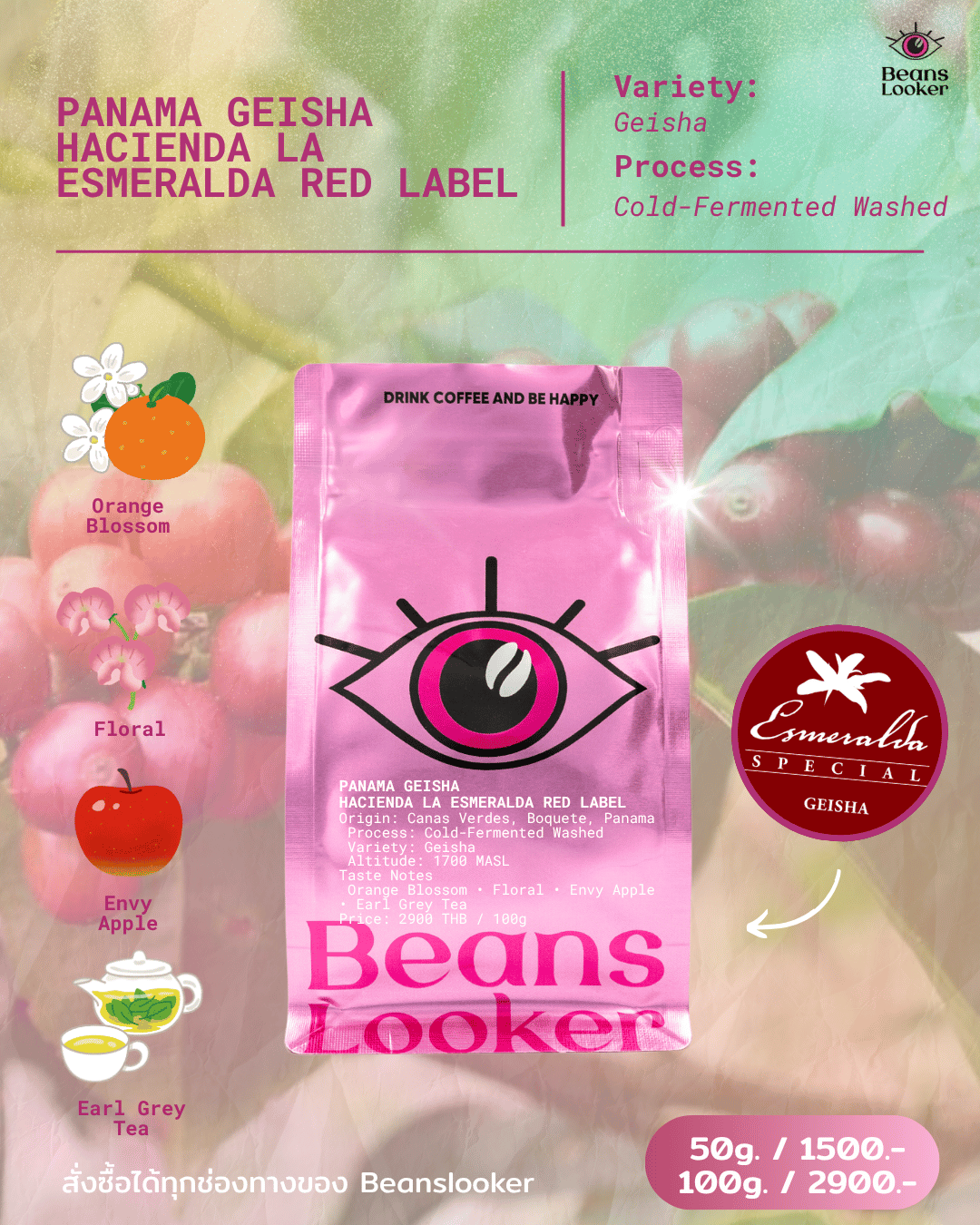
สำหรับล็อตที่ Beanslooker คัดเลือกมาในครั้งนี้ คือ Panama Geisha จาก Hacienda La Esmeralda – Special Cañas Verdes Leon 2FB หรือ Panama Hacienda La Esmeralda Geisha
กาแฟล็อตนี้มาจาก Leon Plot ภายใน Cañas Verdes Farm หนึ่งในพื้นที่ปลูกที่สำคัญที่สุดของ Hacienda La Esmeralda และเป็นหนึ่งในแหล่งกำเนิด Geisha ระดับโลกจากประเทศปานามา
Coffee Information
| Country | Panama |
|---|---|
| Region | Cañas Verdes, Boquete, Panama |
| Estate | Hacienda La Esmeralda |
| Farm | Cañas Verdes |
| Lot | Leon |
| Lot Name | Leon 2FB |
| Variety | Geisha |
| Process | Washed |
| Fermentation | 96-hour low-temperature fermentation |
| Altitude | 1,700 m+ |
| Harvest Date | December 18, 2025 |
| Average Tree Age | 12 years |
| Production Area | 4.5 hectares |
| Drying | Raised beds for 7 days |
Processing Method
กาแฟล็อตนี้เก็บเกี่ยวเมื่อวันที่ 18 ธันวาคม 2025 จาก Leon Plot ภายใน Cañas Verdes Farm ของ Hacienda La Esmeralda
หลังการเก็บเกี่ยว เชอร์รี่กาแฟถูกนำมาสีเปลือกตามกระบวนการ Washed Process ก่อนเข้าสู่การหมักในห้องควบคุมอุณหภูมิต่ำเป็นเวลา 96 ชั่วโมง จากนั้นจึงนำไปตากอย่างช้า ๆ บน Raised Beds เป็นเวลา 7 วัน
แนวทางการแปรรูปนี้ช่วยรักษาความสะอาด ความชัดเจน และความโปร่งใสของกาแฟแบบ Washed Process ขณะเดียวกันก็ช่วยให้รายละเอียดเชิงอะโรมาติกของ Geisha แสดงออกมาได้อย่างละเอียดและสมดุลมากขึ้น
Lot Naming Rules
Hacienda La Esmeralda หรือ Panama Hacienda La Esmeralda Geisha ใช้ระบบการจำแนกล็อตเพื่อระบุข้อมูลสำคัญเกี่ยวกับการเก็บเกี่ยว การหมัก และการตากแห้งของกาแฟแต่ละล็อต
สำหรับ Leon 2FB
| 2 | Harvest Pick Number 2 |
|---|---|
| F | Cold Fermentation / Low-Temperature Fermentation |
| B | Raised Drying Bed (African Bed) |
Fermentation Method
| A | Anaerobic Fermentation |
|---|---|
| F | Cold Fermentation / Low-Temperature Fermentation |
| W | Washed Fermentation under Ambient Temperature |
Drying Method
| C | Cool Drying Room |
|---|---|
| B | Raised Drying Bed (African Bed) |
| P | Patio Drying |
| G | Drum Drying |
| S | Upper-Level Raised Drying Bed |
| I | Lower-Level Raised Drying Bed |
| N | Natural / Sun-Dried Process |
ระบบดังกล่าวช่วยให้สามารถติดตามรายละเอียดของแต่ละล็อตได้อย่างแม่นยำ และสะท้อนมาตรฐานด้านคุณภาพและการจัดการล็อตที่เป็นเอกลักษณ์ของ Hacienda La Esmeralda
Official Notes
- Jasmine
- Lemon
- Orange Blossom
Beanslooker Tasting Impression
- Orange Blossom
- Floral
- Envy Apple
- Earl Grey Tea Finish
กาแฟแก้วนี้เปิดด้วยกลิ่นหอมของดอกส้มและดอกไม้สีขาวอย่างชัดเจน ตามด้วยความสดใสของซิตรัสและความหวานละมุนคล้าย Envy Apple ก่อนจบด้วยฟินิชสะอาดยาวนานในโทน Earl Grey Tea ซึ่งเป็นคาแรกเตอร์ที่ทำให้ Panama Geisha หรือ Panama Hacienda La Esmeralda Geisha จาก Hacienda La Esmeralda ได้รับการยอมรับจากนักดื่มกาแฟทั่วโลก
สัมผัสเสน่ห์ของ Washed Geisha with Low-Temperature Fermentation ผ่าน Panama Geisha ระดับตำนาน
หากอยากเข้าใจว่า Low-Temperature Fermentation สามารถสร้างความแตกต่างให้กับกาแฟได้อย่างไร ล็อต Leon 2FB จาก Hacienda La Esmeralda คือหนึ่งในตัวอย่างที่น่าสนใจที่สุด
กาแฟล็อตนี้ยังคงความสะอาดและความชัดเจนแบบ Washed Process เอาไว้ได้อย่างยอดเยี่ยม ขณะเดียวกันก็ช่วยขยายรายละเอียดของกลิ่นดอกไม้ ซิตรัส และคาแรกเตอร์แบบ Tea-like ให้โดดเด่นยิ่งขึ้น
ผลลัพธ์คือกาแฟที่มีทั้งความโปร่ง ความซับซ้อน และความสง่างามในแบบที่ทำให้ Panama Geisha กลายเป็นหนึ่งในสายพันธุ์ที่ได้รับการยกย่องมากที่สุดในโลก Specialty Coffee
Available at Beanslooker
50g — 1,500 THB
100g — 2,900 THB
Beanslooker — We are looking for the best.
What Is Cold Fermentation Washed? Why Temperature-Controlled Fermentation Is Gaining Attention in Specialty Coffee
Over the past decade, the Specialty Coffee industry has witnessed continuous innovation in coffee processing techniques. From Anaerobic Fermentation and Carbonic Maceration to Thermal Shock and Yeast Inoculation, producers are increasingly exploring ways to gain greater control over quality, consistency, and flavor expression.
One approach that has gained significant attention is Cold Fermentation, a fermentation method conducted under lower and carefully controlled temperatures compared to conventional fermentation.
When applied alongside a traditional washed process, it is often referred to as Cold Fermentation Washed or Washed Coffee with Low-Temperature Fermentation. This approach preserves the cleanliness and clarity associated with washed coffees while allowing producers to manage fermentation with greater precision.
This is particularly relevant for delicate varieties such as Geisha, where subtle aromatic nuances and flavor complexity can easily be influenced by processing decisions. Temperature control during fermentation has therefore become an important tool for preserving balance, clarity, and varietal character.
Coffee Fermentation: From Mucilage Removal to Flavor Development
Historically, coffee fermentation was not intended to create complex flavor profiles.
In traditional washed processing, fermentation served a practical purpose: removing the sticky layer of mucilage surrounding the parchment coffee before washing and drying.
This stage typically lasts between 6 and 36 hours, depending on temperature, mucilage thickness, and environmental conditions.
Today, however, producers view fermentation very differently.
Microorganisms such as yeast and bacteria metabolize sugars and organic compounds within the coffee fruit, producing esters, organic acids, and volatile aromatic compounds that can significantly influence the final cup profile.
As a result, fermentation has evolved from a simple preparation step into one of the most powerful tools available for creating distinctive and high-quality specialty coffees.
What Is Controlled Fermentation?
Modern specialty coffee processing is increasingly moving toward Controlled Fermentation.
Rather than allowing naturally occurring microorganisms to operate without intervention, producers actively manage key variables such as:
- Temperature
- Fermentation time
- Oxygen availability
- pH levels
- Moisture content
- Microbial or yeast strains
This philosophy has led to the development of numerous modern fermentation techniques, including:
- Anaerobic Fermentation
- Carbonic Maceration
- Yeast Inoculation
- Thermal Shock
- Cold Fermentation
These methods are becoming increasingly common in high-end micro lots and competition coffees around the world.
Longer Fermentation Does Not Always Mean Better Coffee
In recent years, some producers have experimented with fermentation periods lasting hundreds of hours, with certain lots exceeding 700 hours.
However, fermentation quality is not determined by time alone.
Temperature and environmental conditions often have a greater impact on microbial activity than duration itself.
A 24-hour fermentation in a tropical climate may generate more biological activity than a 48-hour fermentation in a cooler environment.
Without proper control, excessively long fermentation can lead microorganisms to exhaust available sugars and begin degrading compounds within the coffee itself, potentially creating undesirable flavors and over-fermented characteristics.
Successful fermentation is therefore not about extending time indefinitely but about finding the optimal balance for each coffee lot.
What Is Cold-Fermented Washed Process?
A Cold-Fermented Washed Process combines the principles of controlled fermentation with traditional washed processing.
After depulping, the coffee is fermented in an environment where temperature is intentionally maintained below typical fermentation conditions.
Lower temperatures slow microbial activity, allowing biochemical transformations to occur more gradually and predictably.
The result is often associated with:
- Greater aromatic clarity
- More pronounced floral characteristics
- Enhanced fruity sweetness
- Tea-like complexity
Silky mouthfeel
- Longer-lasting finish
- High clarity typical of washed coffees
After fermentation, the coffee is washed and dried in the same manner as a conventional washed coffee.
How Does Fermentation Influence Perceived Sweetness?
An interesting aspect of fermentation is that it does not increase the sugar content within the coffee bean.
In fact, microorganisms consume sugars as an energy source during fermentation.
What often creates the perception of increased sweetness is the formation of aromatic compounds during the process.
When we encounter aromas reminiscent of ripe fruit, honey, or flowers, our brains naturally associate those aromas with sweetness. As a result, the coffee may appear sweeter and more complex, even though its actual sugar content has not increased.
Why Is Cold Fermentation Particularly Interesting for Geisha?
When discussing Panama Geisha, one of its defining characteristics is its remarkable aromatic complexity and delicacy.
Common attributes found in high-quality Geisha coffees include:
- Floral aromas
- Jasmine-like fragrance
- Citrus notes
- Tea-like character
- Elegant acidity
- Silky texture
Because of these delicate qualities, producers pay close attention to every stage of production, from harvesting and sorting to fermentation and drying.
Cold fermentation offers an appealing approach because it preserves the cleanliness associated with washed coffees while providing greater control over the fermentation environment.
Hacienda La Esmeralda: The Farm That Changed Geisha History
When discussing the most influential Geisha coffees in the world, Hacienda La Esmeralda is impossible to ignore.
The estate was originally established in 1940 by Swedish owner Hans Elliot, who consolidated several parcels of land into a large estate that would later become Palmira Farm and Cañas Verdes Farm.
In 1967, Swedish-American banker Rudolph A. Peterson purchased Hacienda La Esmeralda as an investment. At the time, most of the property was dedicated to cattle ranching, with only limited coffee cultivation.
In 1975, the Peterson family converted much of the estate into a dairy operation, which still occupies approximately half of the property today.
During the mid-1980s, the family began exploring opportunities to diversify the farm. Given Boquete's long coffee-growing history, coffee production became a natural focus.
In 1988, they undertook a major coffee expansion project at Palmira.
At the time, Panamanian coffee was still largely viewed as a commodity crop. It was not until the mid-1990s that North American buyers began promoting the concept of specialty coffee.
In 1997, the Peterson family acquired a new property that later became Jaramillo Farm. Chosen for its high elevation and proximity to Volcán Barú, this farm would eventually become the birthplace of one of coffee's most important discoveries.
The rediscovery of Geisha on this farm changed specialty coffee history forever.
In 2004, Hacienda La Esmeralda Geisha won the Best of Panama competition. That year, the Peterson family separated coffees from individual plots during processing, something they had never done before.
One particular lot from the high elevations of Jaramillo astonished judges with its clarity, sweetness, and extraordinary aromatic complexity.
For many coffee professionals, it was one of the first opportunities to experience a pure Geisha coffee.
Compared with traditional Latin American coffees of the era, Esmeralda Geisha displayed a profile more reminiscent of Ethiopian coffees, featuring exceptional florality, transparency, and complexity.
That same year, Hacienda La Esmeralda set a new auction price record and became one of the most iconic names in specialty coffee.
Why Is Cañas Verdes Important?
Cañas Verdes is one of the most important coffee-growing areas within Hacienda La Esmeralda.
Located on the slopes surrounding Volcán Barú in Boquete, Panama, the area benefits from cool temperatures, high elevations, and nutrient-rich volcanic soils.
These conditions are ideal for producing exceptional Geisha coffees.
Part of Cañas Verdes was included in the original Peterson family acquisition in 1967. As specialty coffee production became increasingly important, the family continued expanding and developing the area.
Today, Cañas Verdes is recognized as one of the most celebrated Geisha-producing origins within Hacienda La Esmeralda, consistently producing award-winning lots that express the unique terroir of Boquete.
Panama / Hacienda La Esmeralda – Special Cañas Verdes Leon 2FB
The coffee selected by Beanslooker is Panama Geisha – Hacienda La Esmeralda Special Cañas Verdes Leon 2FB.
This lot comes from the Leon plot within Cañas Verdes Farm, one of the most important Geisha-growing sites within Hacienda La Esmeralda.
Coffee Information
| Country | Panama |
|---|---|
| Region | Cañas Verdes, Boquete, Panama |
| Estate | Hacienda La Esmeralda |
| Farm | Cañas Verdes |
| Lot | Leon |
| Lot Name | Leon 2FB |
| Variety | Geisha |
| Process | Washed |
| Fermentation | 96-hour low-temperature fermentation |
| Altitude | 1,700 m+ |
| Harvest Date | December 18, 2025 |
| Average Tree Age | 12 years |
| Production Area | 4.5 hectares |
| Drying | Raised beds for 7 days |
Processing Method
This lot was harvested on December 18, 2025, from the Leon plot at Cañas Verdes Farm.
After harvesting, the cherries were depulped as part of the washed process before undergoing a 96-hour fermentation in a temperature-controlled low-temperature room. The coffee was then slowly dried on raised beds for seven days.
This processing approach preserves the cleanliness and clarity associated with washed coffees while allowing the delicate aromatic qualities of Geisha to express themselves with greater precision and balance.
Lot Naming Rules
Hacienda La Esmeralda uses a detailed lot classification system to identify harvest, fermentation, and drying information.
For Leon 2FB:
| 2 | Harvest Pick Number 2 |
|---|---|
| F | Cold Fermentation / Low-Temperature Fermentation |
| B | Raised Drying Bed (African Bed) |
Fermentation Method Codes
| A | Anaerobic Fermentation |
|---|---|
| F | Cold Fermentation / Low-Temperature Fermentation |
| W | Washed Fermentation under Ambient Temperature |
Drying Method Codes
| C | Cool Drying Room |
|---|---|
| B | Raised Drying Bed (African Bed) |
| P | Patio Drying |
| G | Drum Drying |
| S | Upper-Level Raised Drying Bed |
| I | Lower-Level Raised Drying Bed |
| N | Natural / Sun-Dried Process |
Official Notes
- Jasmine
- Lemon
- Orange Blossom
Beanslooker Tasting Impression
- Orange Blossom
- Floral
- Envy Apple
- Earl Grey Tea Finish
This cup opens with expressive orange blossom and white floral aromatics, followed by bright citrus character and gentle sweetness reminiscent of Envy apple. The finish is clean, elegant, and tea-like, with a lingering Earl Grey quality that has become synonymous with exceptional Panama Geisha.
Experience the Elegance of Washed Geisha with Low-Temperature Fermentation
For those interested in understanding how low-temperature fermentation can influence coffee quality, Leon 2FB offers an excellent example.
It maintains the remarkable clarity and cleanliness expected from a washed Geisha while enhancing floral aromatics, citrus complexity, and tea-like elegance.
The result is a coffee that is transparent, refined, and beautifully expressive — a profile that has helped establish Panama Geisha as one of the most celebrated coffee varieties in the world.
Available at Beanslooker
50g — 1,500 THB
100g — 2,900 THB
Beanslooker — We are looking for the best.